Michael Omoke
ENDanskDK

Seven Gothic Tales — A Return to America

America heard her first.

Danish literary icon Karen Blixen (1885–1962) needs no introduction. She is best known to the world through Out of Africa — and through the 1985 film starring Meryl Streep and Robert Redford.

Yet before that global image hardened around her, another book crossed the Atlantic first: Seven Gothic Tales, her classic debut, published in New York in 1934.

That book now returns to America — not as nostalgia, not as a film or theatre adaptation, but as a Gesamtkunstwerk: a total work of art, a cycle of seven multisensory immersive installations across American states. The first of the seven stories, The Dreamers, begins in New York, where Blixen made her literary debut under the pseudonym Isak Dinesen, then opens the wider route: Denmark as homecoming, Kenya as the source to which the imagination returns.

2026–2030 cycle Seven installations First tale: The Dreamers
Scroll into the world
INITIAL DEVELOPMENT FUNDING American development phase
Danish Agency for Culture and Palaces
Ministry of Foreign Affairs of Denmark
THE SEVEN TALES

Seven Gothic Tales is not one story.
It is seven distinct worlds.

Seven mysterious, seductive, and infinitely layered worlds — transformed from page into immersive multisensory installations: seen, heard, touched, smelled, tasted, and entered as labyrinthine chambers across America.

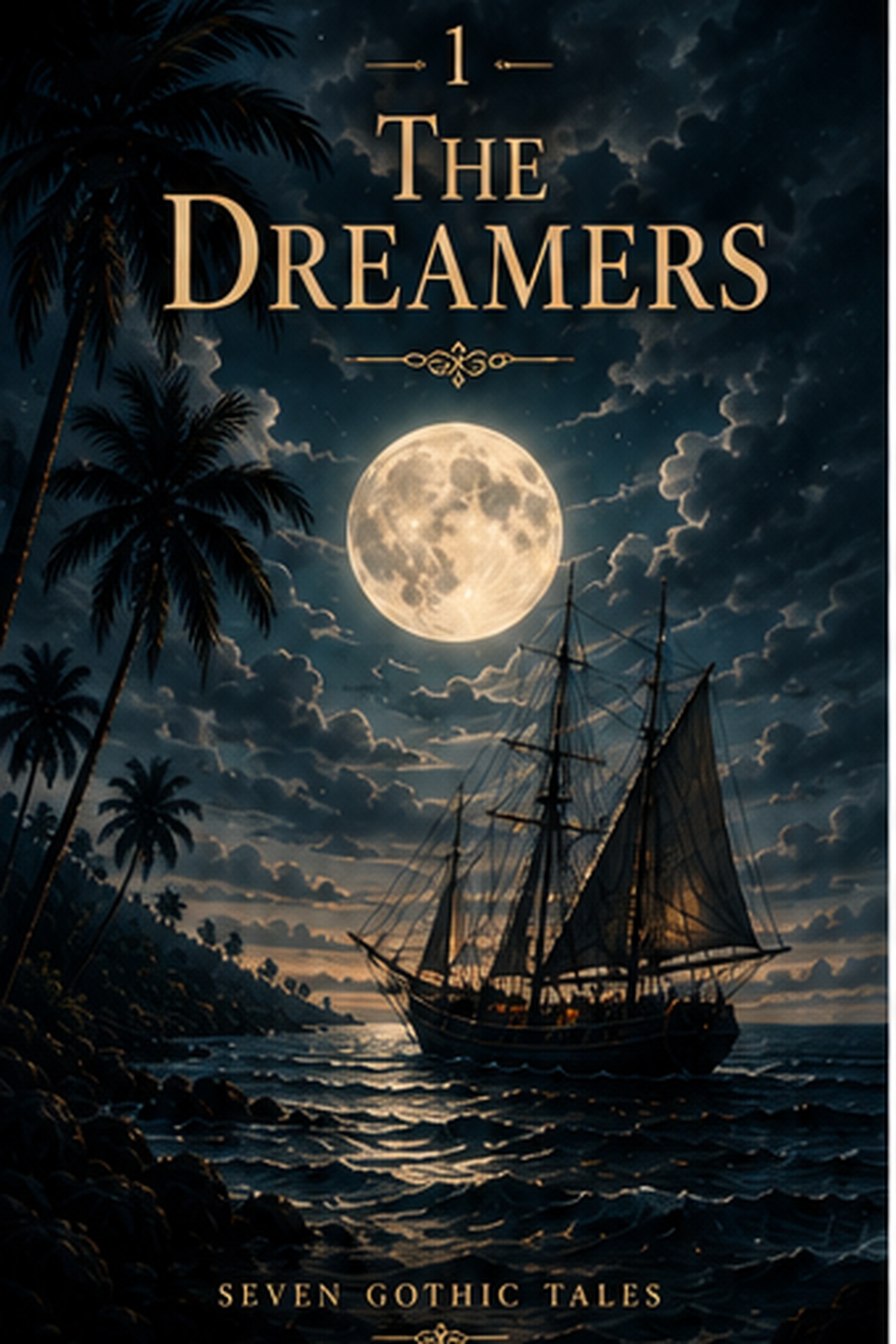
I · THE DREAMERS — Seven Gothic Tales cover
I · THE DREAMERS
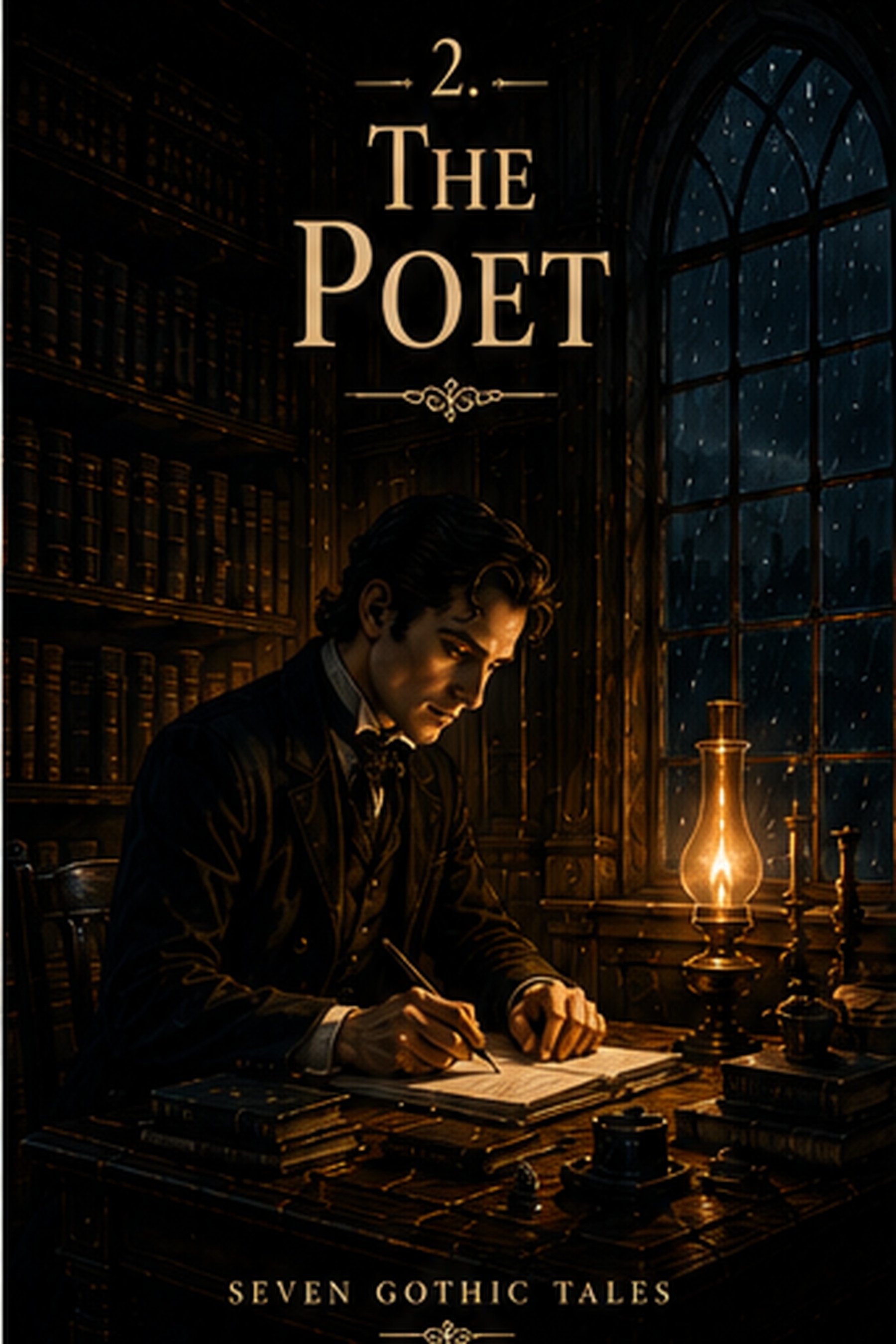
II · THE POET — Seven Gothic Tales cover
II · THE POET
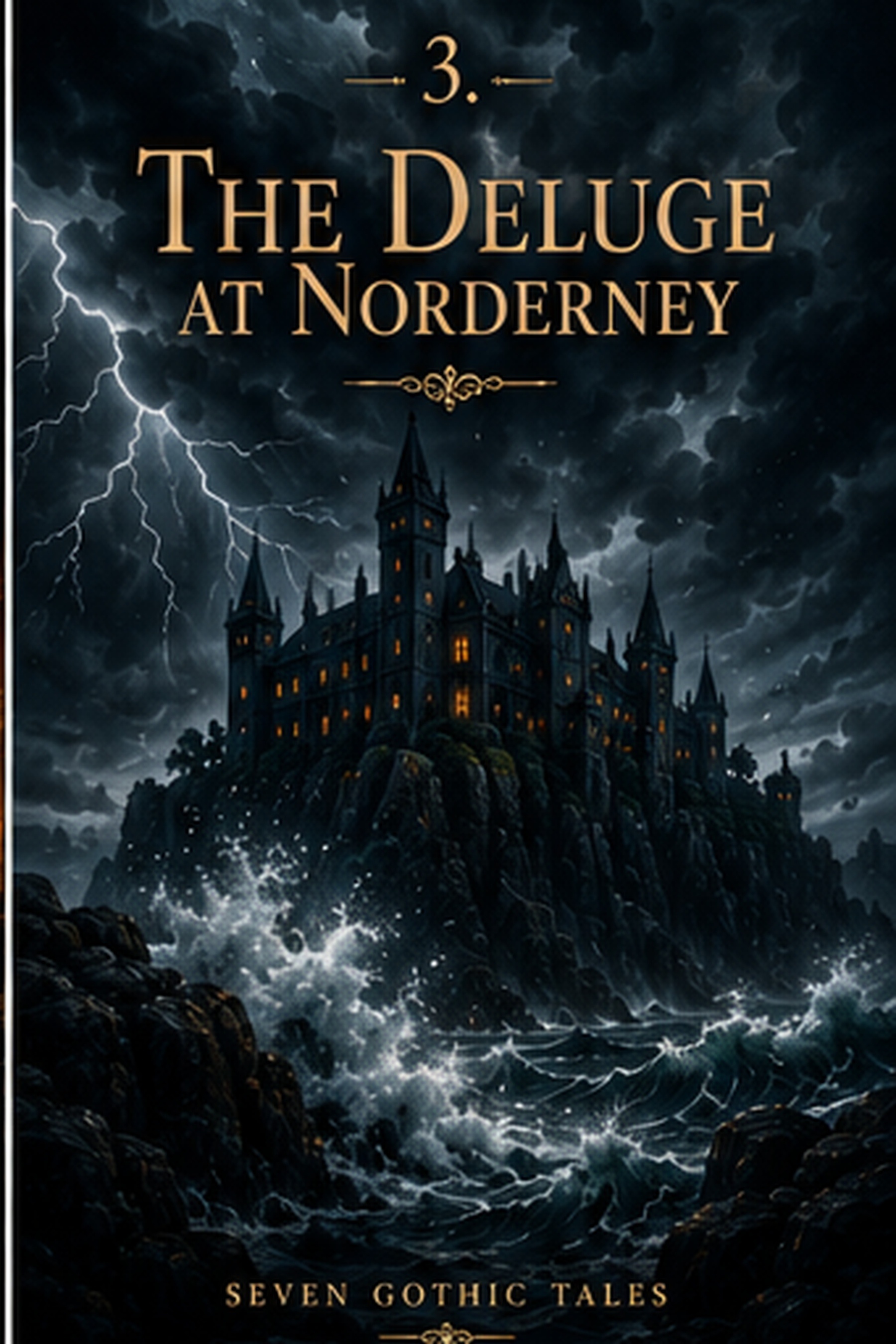
III · THE DELUGE AT NORDERNEY — Seven Gothic Tales cover
III · THE DELUGE AT NORDERNEY
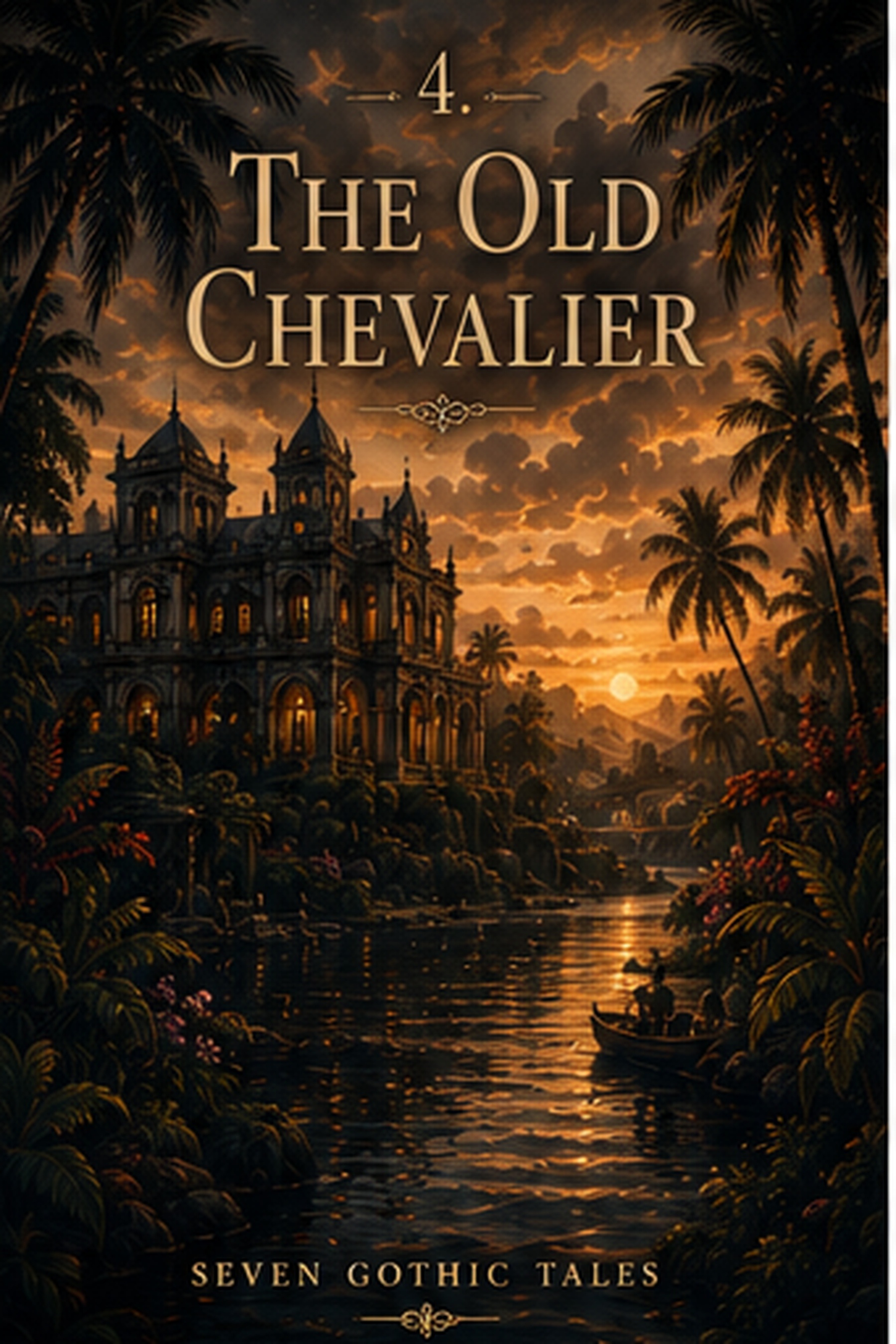
IV · THE OLD CHEVALIER — Seven Gothic Tales cover
IV · THE OLD CHEVALIER
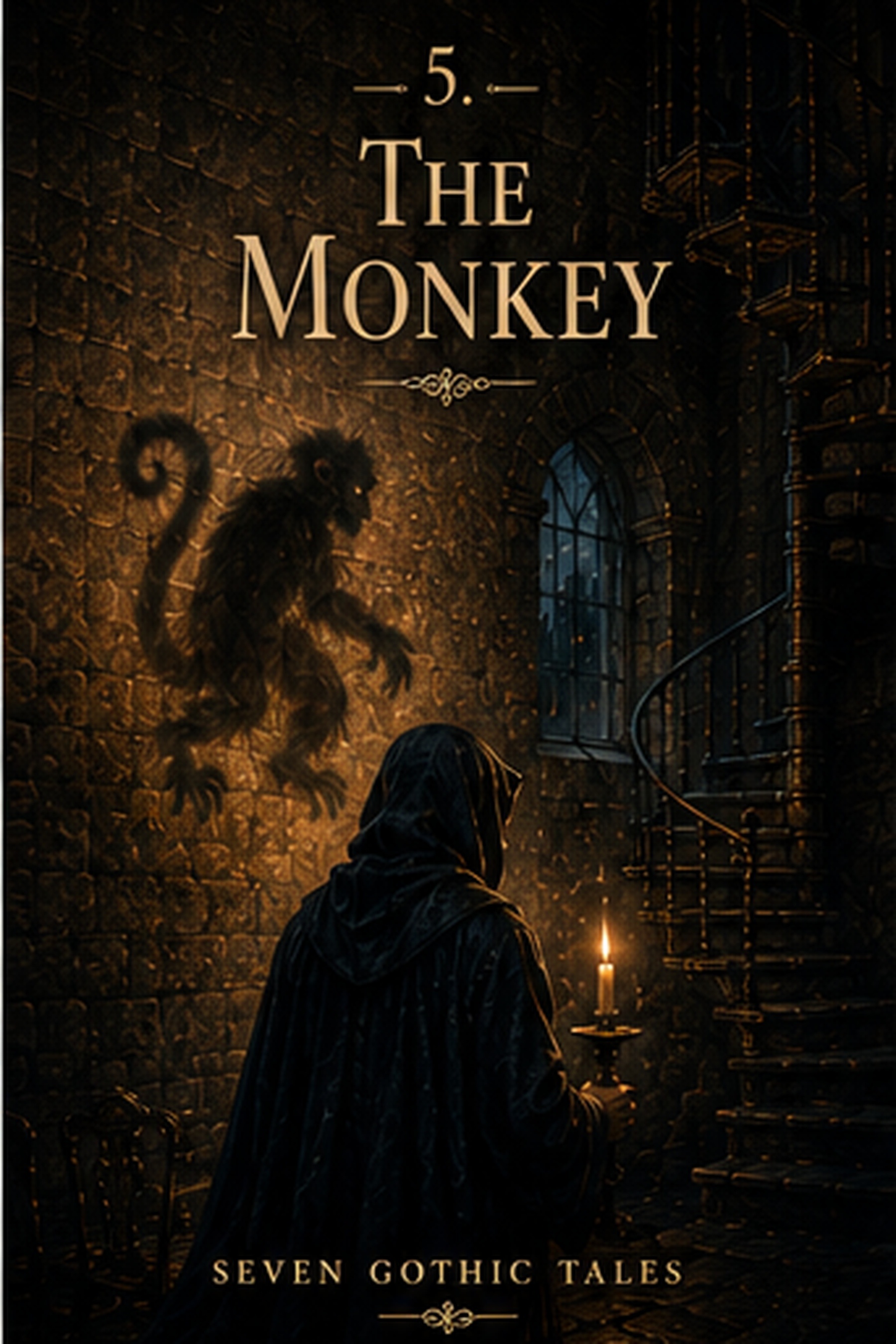
V · THE MONKEY — Seven Gothic Tales cover
V · THE MONKEY
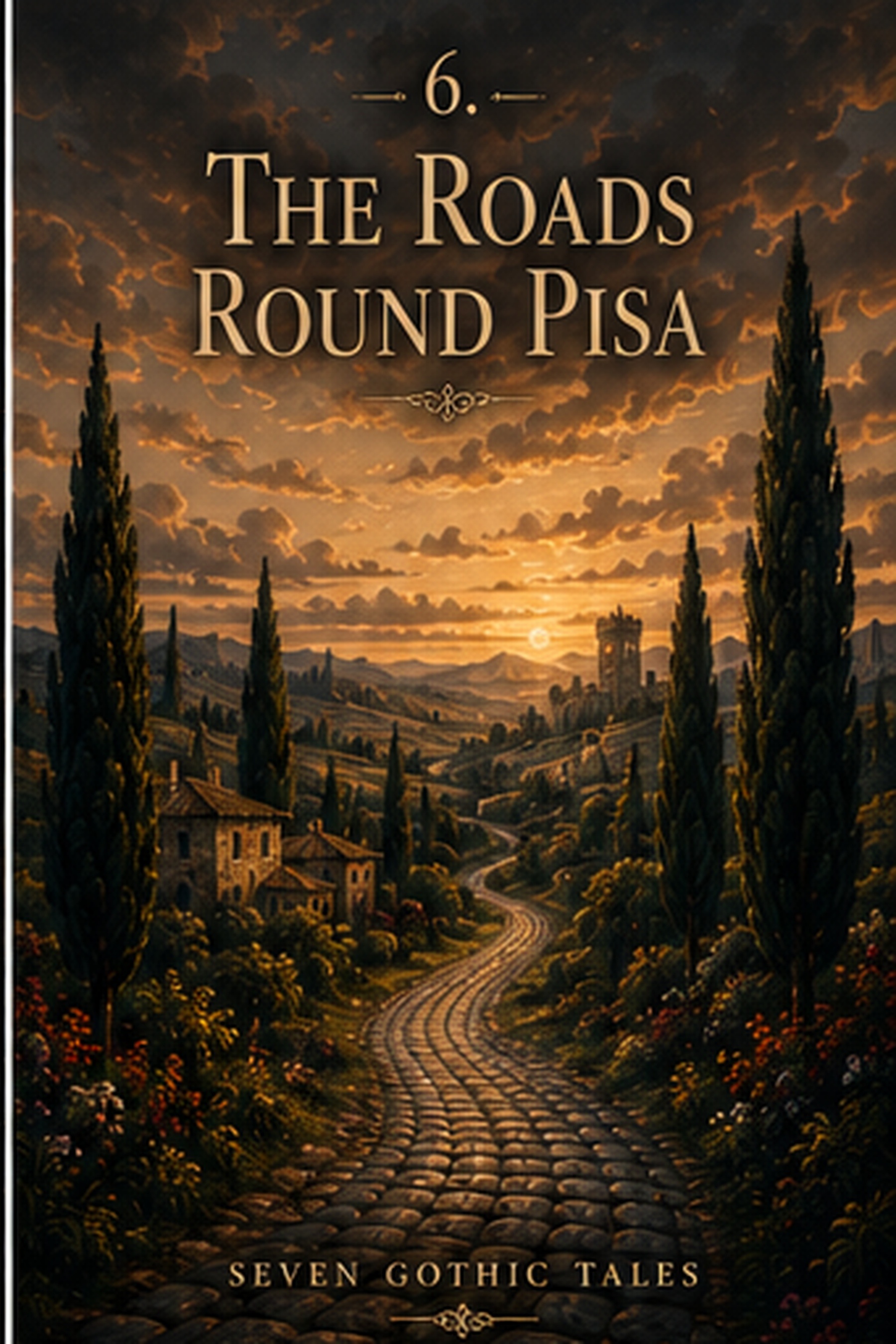
VI · THE ROADS ROUND PISA — Seven Gothic Tales cover
VI · THE ROADS ROUND PISA
VII · THE SUPPER AT ELSINORE — Seven Gothic Tales cover
VII · THE SUPPER AT ELSINORE
I · THE DREAMERS — Seven Gothic Tales cover
I · THE DREAMERS
II · THE POET — Seven Gothic Tales cover
II · THE POET
III · THE DELUGE AT NORDERNEY — Seven Gothic Tales cover
III · THE DELUGE AT NORDERNEY
IV · THE OLD CHEVALIER — Seven Gothic Tales cover
IV · THE OLD CHEVALIER
V · THE MONKEY — Seven Gothic Tales cover
V · THE MONKEY
VI · THE ROADS ROUND PISA — Seven Gothic Tales cover
VI · THE ROADS ROUND PISA
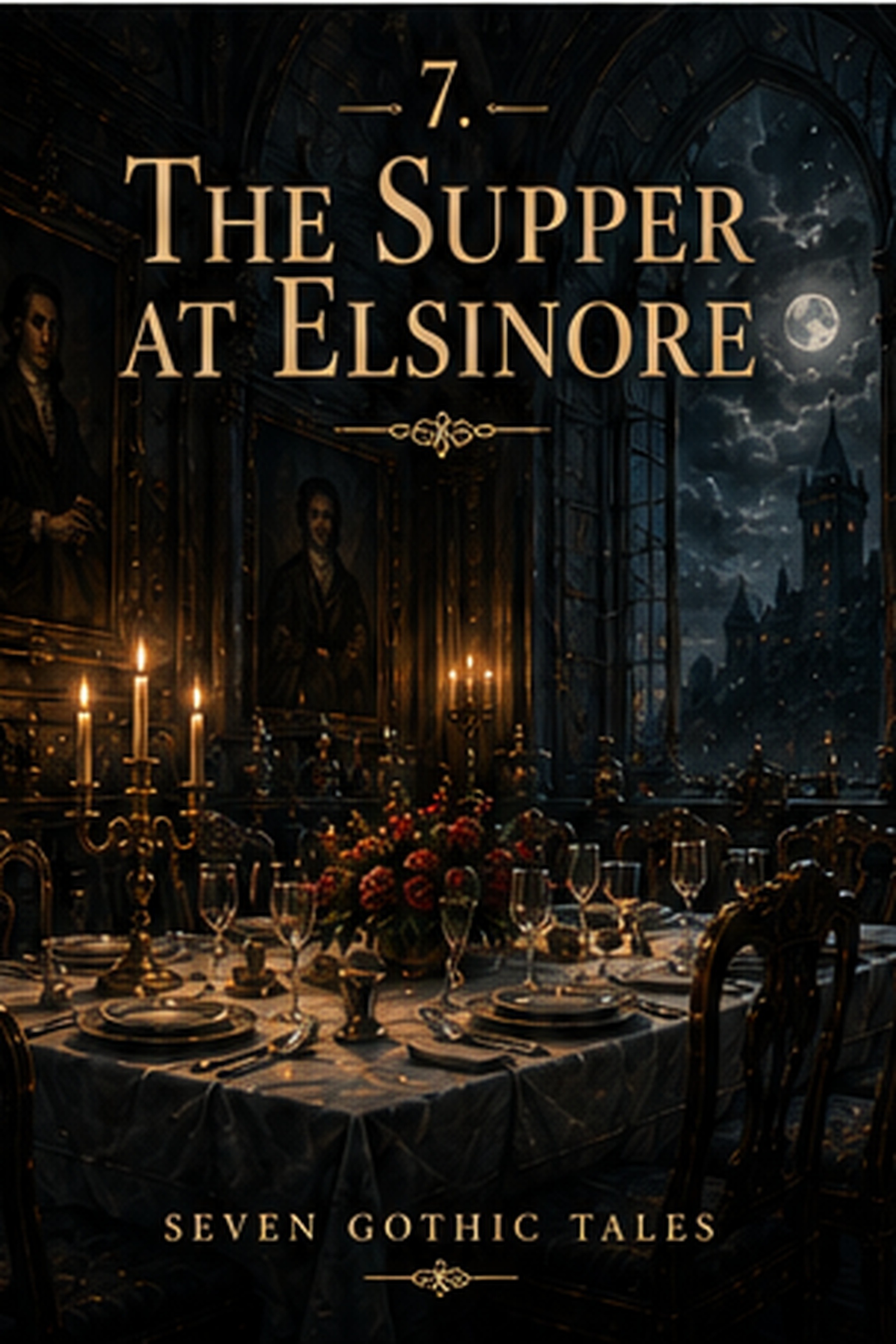
VII · THE SUPPER AT ELSINORE — Seven Gothic Tales cover
VII · THE SUPPER AT ELSINORE
Project Compass

Country, Cycle, and Artistic Product

The tri-continental structure does not mean that the same project is repeated identically in three countries. The project distinguishes between country, cycle, and artistic product.

THE DREAMERS Prototype / Alpha Case

THE DREAMERS remains the first realised product: the prototype, or alpha case, through which the wider method for Seven Gothic Tales is tested, refined, and made visible.

Dhow as compass
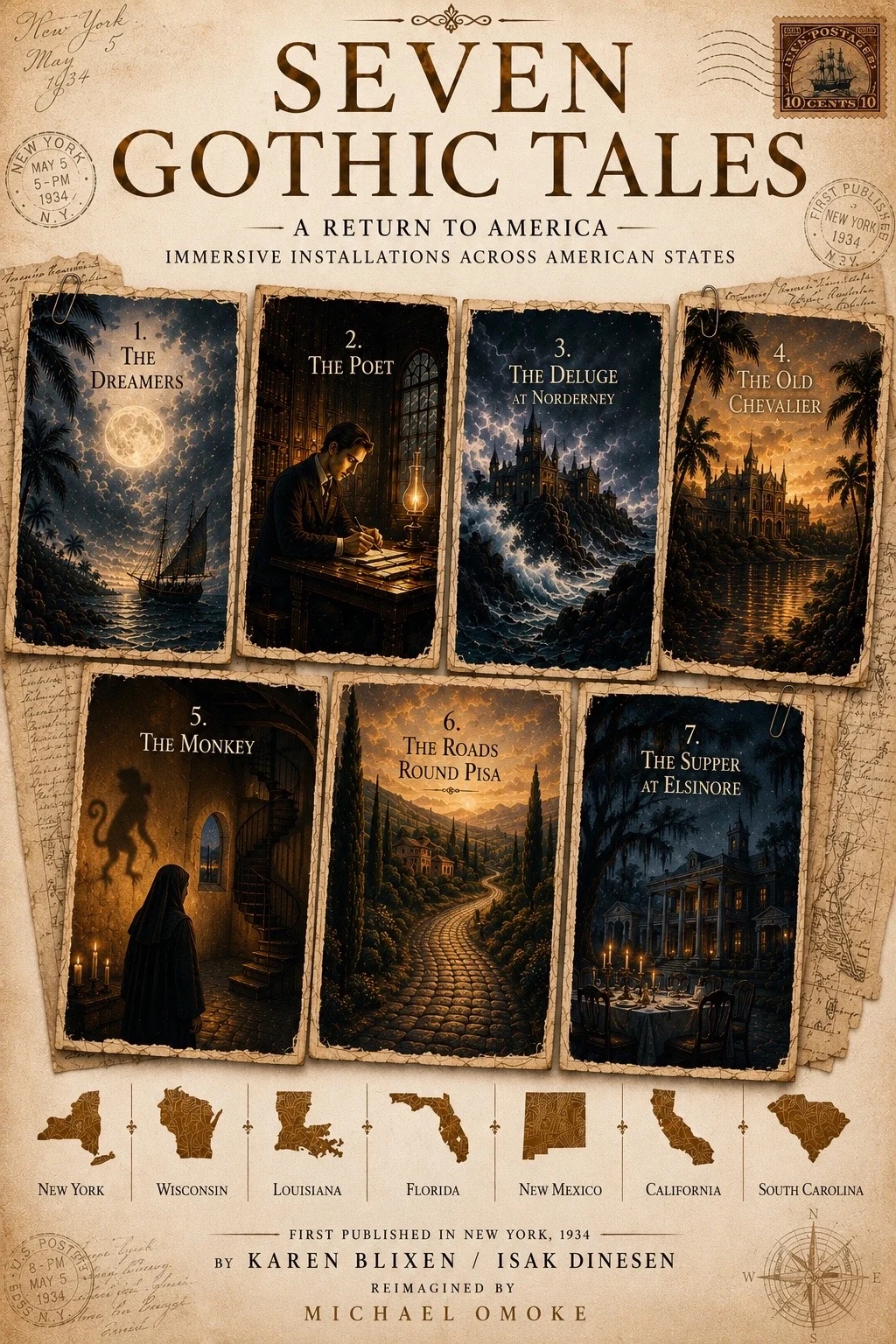
Seven Gothic Tales — A Return to America poster showing the seven tales aligned with seven carefully selected U.S. states

The larger project

A total artwork in development.

A high-concept reimagining of Karen Blixen’s Seven Gothic Tales, initially supported in development by the Danish Ministry of Culture and the Danish Ministry of Foreign Affairs.

The project unfolds across seven carefully selected U.S. states — each tale becoming its own spatial world, shaped through multisensory art forms, architecture, atmosphere, sound, scent, light, movement, material, and embodied encounter.

Each tale is thoughtfully matched with a state whose landscapes and atmospheres deepen and amplify its narrative essence, creating a resonant cross-country journey that moves from New York to Wisconsin, Louisiana, Florida, New Mexico, California, and South Carolina.

Here, audiences do not simply read or observe these stories; they inhabit them. While Blixen’s original texts remain intact, they are reborn as immersive installations, transforming written prose into spatial poetry. This fusion of intricate Danish literature and a bold hybrid of American and Danish artistic expression shifts Blixen’s stories off the page, inviting audiences into environments where her narratives can be vividly seen, intimately felt, tangibly touched, and richly smelled.

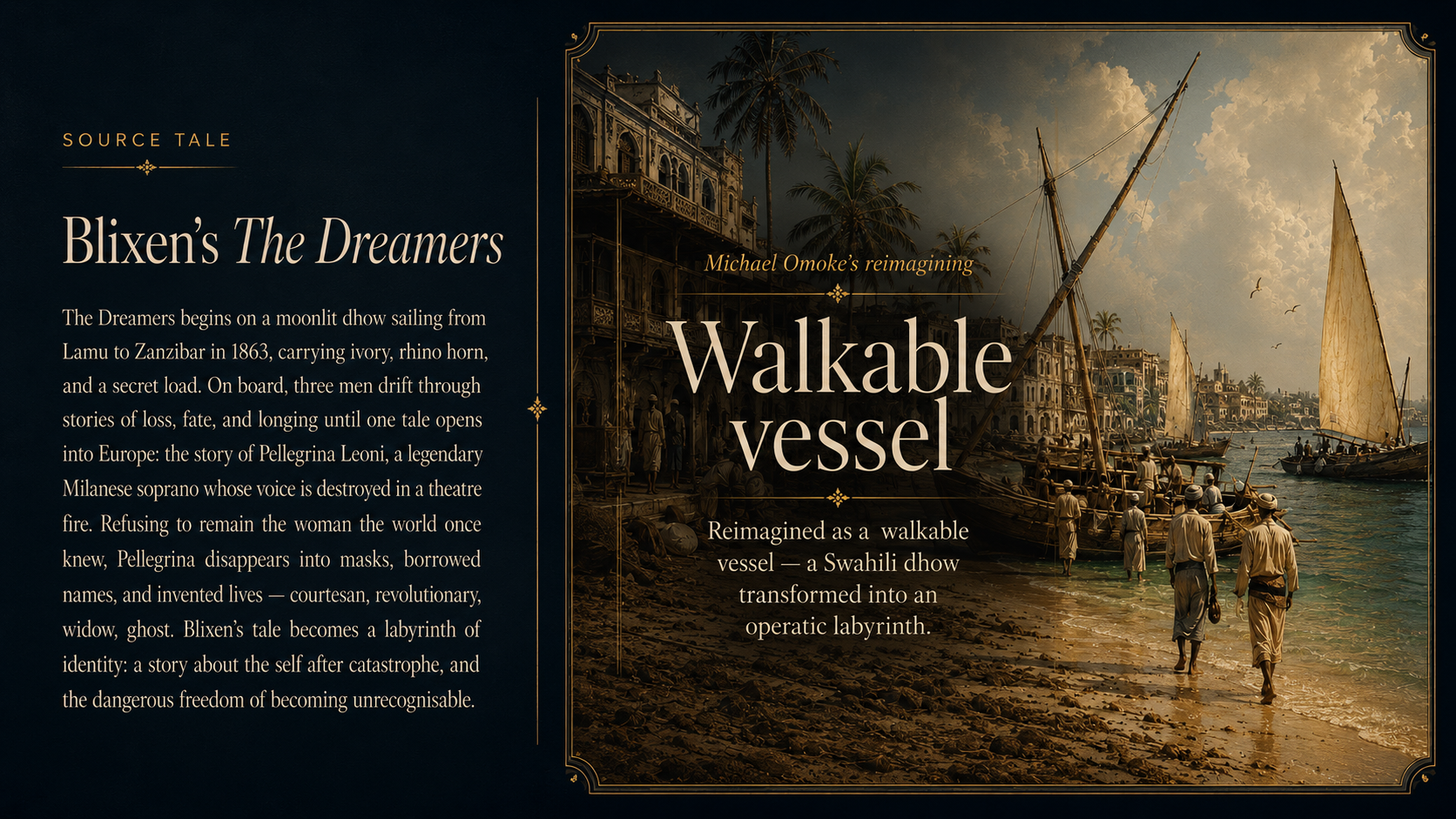
The Dreamers — From Lamu–Zanzibar to Milan serves as the flagship work: a fully developed immersive performance and spatial installation in which a Swahili dhow is reimagined as an operatic labyrinth.

The remaining six tales are developed as Denmark–U.S. co-creations, mounted through site-responsive collaborations in their corresponding American states.

This is not a retelling.

It is a hybrid form: a sensory voyage, a safari, an expedition into the genius of Karen Blixen’s literary imagination.

  • Architecture
  • Atmosphere
  • Sound
  • Scent
  • Light
  • Movement
  • Material
  • Encounter

The proposition

A literary world can be entered.

A great literary work need not remain on the page. It does not have to become theatre on a stage, or cinema on a screen, in order to live again.

Seven Gothic Tales becomes architecture, atmosphere, movement, sound, scent, taste, and physical encounter — a world no longer only read, staged, or watched, but crossed by the body.

Conceptual declaration

Not merely immersive.

A 21st-century Gesamtkunstwerk.

Immersive describes how the visitor enters. Gesamtkunstwerk describes how the work is built.

The Dreamers — From Lamu–Zanzibar to Milan transforms Karen Blixen’s prose into a total artwork: vessel-architecture, sound, scent, light, movement, projection, material, and atmosphere fused into one navigable system.

The visitor does not simply watch or read. The visitor enters, moves, senses, and completes the work.

Literature Architecture Sound Scent Light Movement Image Material Atmosphere

First installation · The Dreamers

Our voyage begins with The Dreamers.

The tale becomes a walkable vessel: a Swahili dhow reimagined as an operatic labyrinth.

It carries Pellegrina Leoni from Lamu to Milan — through disappearance, identity, and reinvention — until Blixen’s story is no longer only told, but physically entered.

This is the first crossing of the larger Seven Gothic Tales cycle.

Story chamber

The Tale Within the Dhow

A synopsis of Karen Blixen’s The Dreamers

On a full-moon night in 1863, a dhow sails from Lamu toward Zanzibar carrying ivory, rhino-horn, and a more dangerous cargo: a secret story beginning to stir beneath the surface of the night.

On the after deck, three figures gather around a lantern: young Said Ben Ahamed, the ruined storyteller Mira Jama, and the Englishman Lincoln Forsner. Mira speaks of dreams, fear, age, and the bent taproot of a coffee tree — the damaged root that sends delicate surface roots outward, flowering richly even as the tree fails to thrive.

Lincoln, whom Mira recognises as one of the dreamers, begins his own tale. Years earlier in Rome, he fell in love with Olalla: an older, luminous woman marked by fire, a woman who seems to have no shadow, and who says that her heart is buried in the garden of a little white villa near Milan.

When Olalla disappears, Lincoln follows her traces across Europe. Other men reveal that they too have been transformed by women who may be the same woman under other names: Madame Lola, the revolutionary milliner of Lucerne, and Madame Rosalba, the saintly widow whose holiness carries the scent of miracle and decay.

The final revelation belongs to Marcus Cocoza. The woman was once Pellegrina Leoni, the adored opera singer whose voice held the world. During a performance in Milan, fire fell from the theatre ceiling. Pellegrina survived, but the shock took her voice. The singer died in public; the woman lived on in fragments, masks, disguises, and unfinished identities.

The Dreamers is therefore not simply a tale of pursuit. It is a story about what remains after the voice is gone; about the violence of being named; about women turned into dreams by the men who fail to understand them; and about the strange freedom of becoming many selves after the world has buried the one it loved.
Lamu Zanzibar Rome Milan Lucerne Basel Amsterdam Jerusalem Andermatt
Voice Fire Mask Pursuit Dream Disappearance

The master project

Seven Gothic Tales is the continent. The Dreamers is the first vessel.

The poster names the whole 2026–2030 return: seven tales, seven American states, one literary cycle transformed into immersive rooms, routes, atmospheres, and public thresholds.

Full cycle · 2026–2030

The first tale begins with The Dreamers.

Seven Gothic Tales — A Return to America poster showing the seven immersive installations
Master map · Seven Gothic Tales — A Return to America

The return

Denmark is the point of departure. America is the return.

Seven Gothic Tales first found its great audience across the Atlantic. The American strand returns Blixen’s debut work to the country that recognized and amplified it early — not as nostalgia, but as a new act of cultural imagination.

The project begins from Denmark, Blixen’s literary homeland, and opens outward through an American return: a public, literary, and diplomatic re-entry into the world that first received the book.

A literature you can enter

The page becomes atmosphere.

In this installation, reading is replaced by traversal — and the senses become the grammar. Blixen’s prose is treated as pressure: each extracted moment becomes a sensory instruction, then a chamber the visitor must cross.

This is where the Gesamtkunstwerk becomes sensory: each channel carries part of the story without revealing the full working architecture behind the Method Dossier.

CLASSIFIED METHOD Authorial method held in the dossier.

The public page reveals the sensory result. The full extraction logic remains inside the Method Dossier.

Open the file

Signal desk

Lift receiver and tune the room.

The receiver is the sound-chamber switchboard. It does not play music as background. It opens frequencies from inside the story: hull, lantern, opera fire, lost voice.

One frequency at a time. Hang up to reseal the room.

Signal closed. Tap a frequency to open the chamber.

The Method

Status

In development.

Available for curatorial, institutional, and producing dialogue. The public page opens the world; the private dossier carries the deeper architecture.