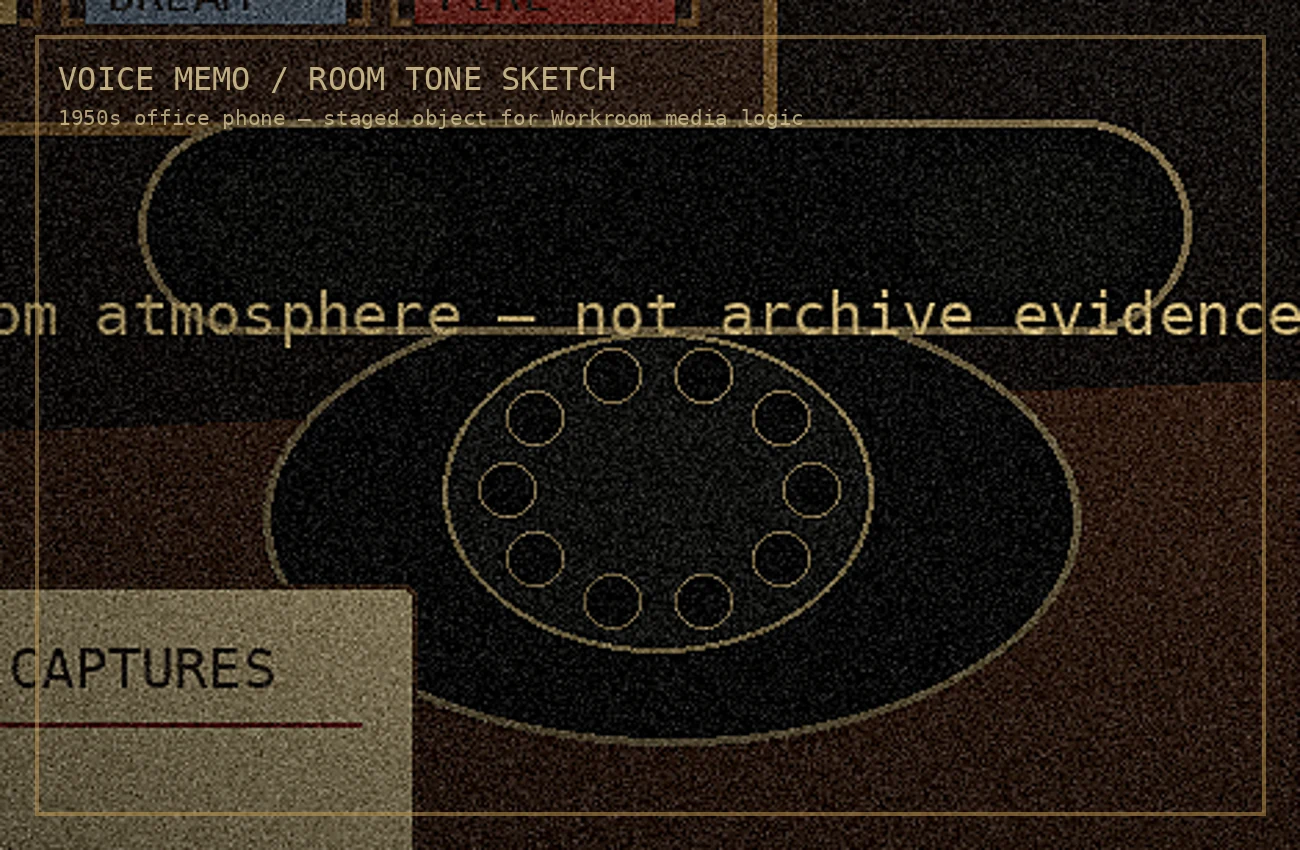
Room tone sketch: hum, paper, desk, atmosphere.
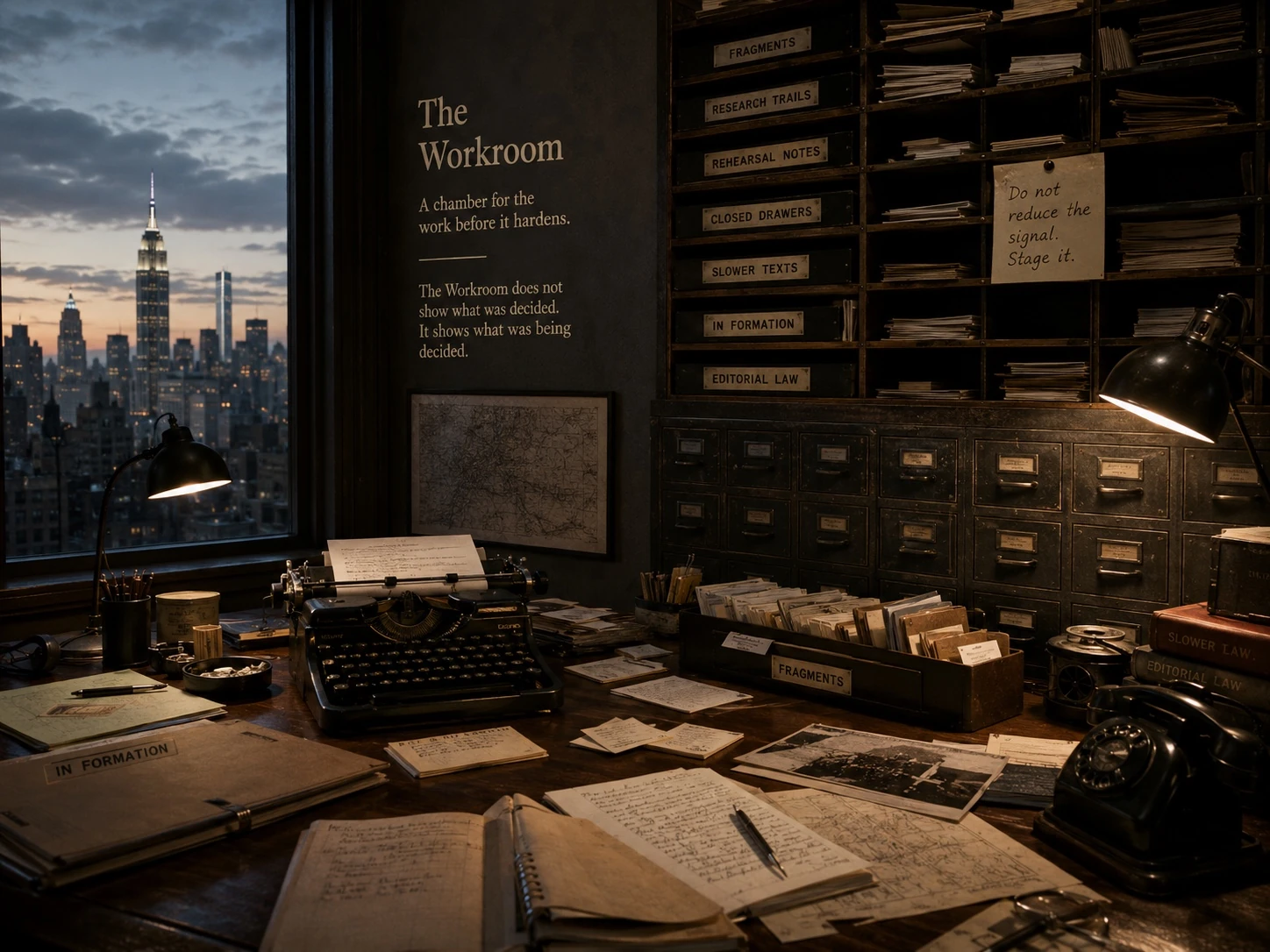
A chamber for the work before it hardens. The Workroom does not show what was decided. It shows what was being decided.
Staged evidence objects
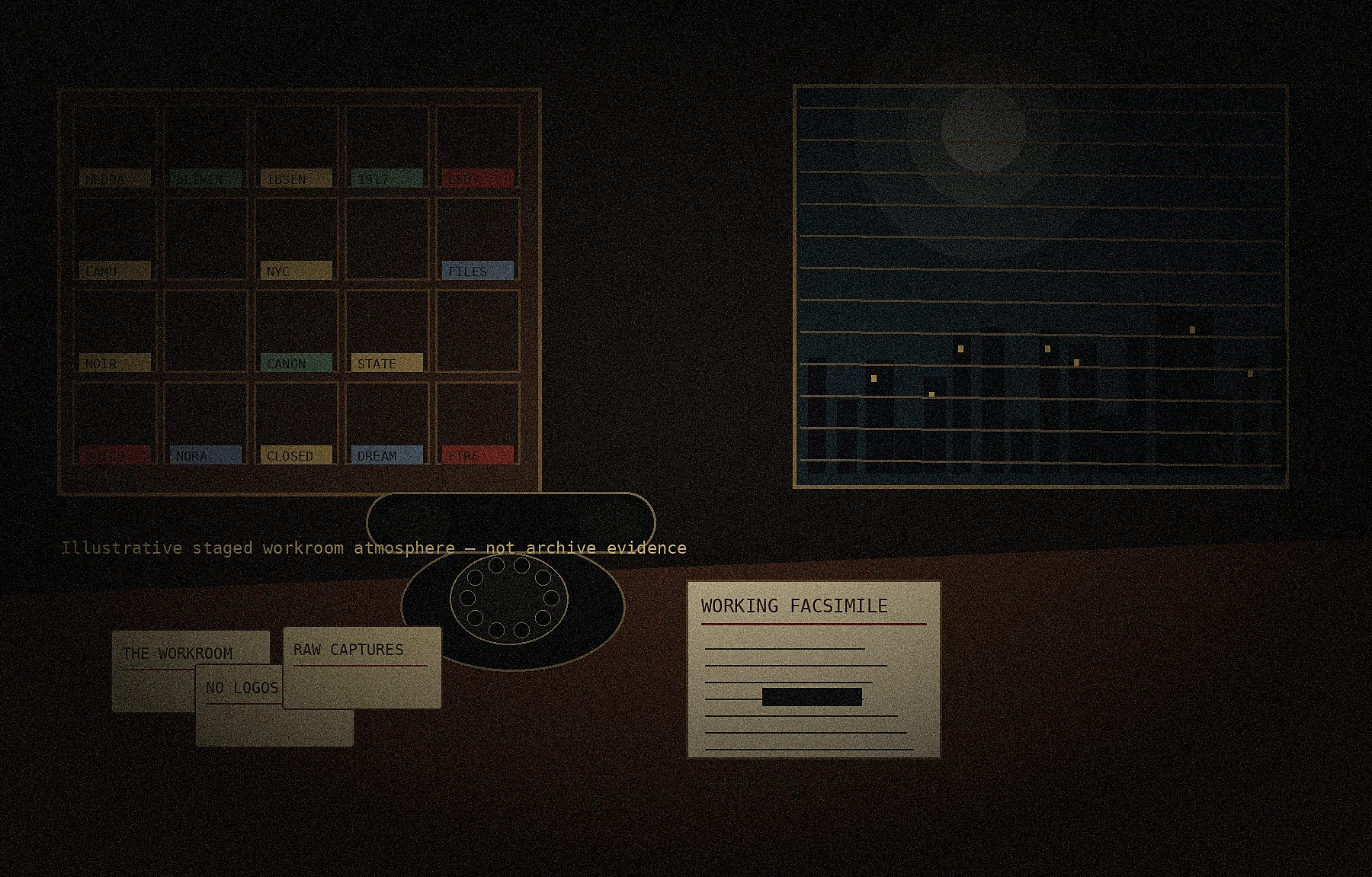
These first objects are authored workroom atmosphere: desk, phone, pigeonholes, memos, route-lines, and marginalia — the kind of working evidence this room can later hold.
What this room is
The Workroom is the live chamber behind the finished work. What appears here is working matter: sentences before they become plays, research before it becomes dramaturgy, rehearsal discoveries before they become public language, and project sparks before they become dossiers.
It is read, not interacted with. No comments. No likes. No metrics. The authority of the room comes from restraint.
Signal first
The Workroom begins as room tone: hum, paper, desk, atmosphere. A voice memo is not a podcast; it is a captured hesitation, a scene problem, a walk, a breath.

Room tone sketch: hum, paper, desk, atmosphere.
First entries
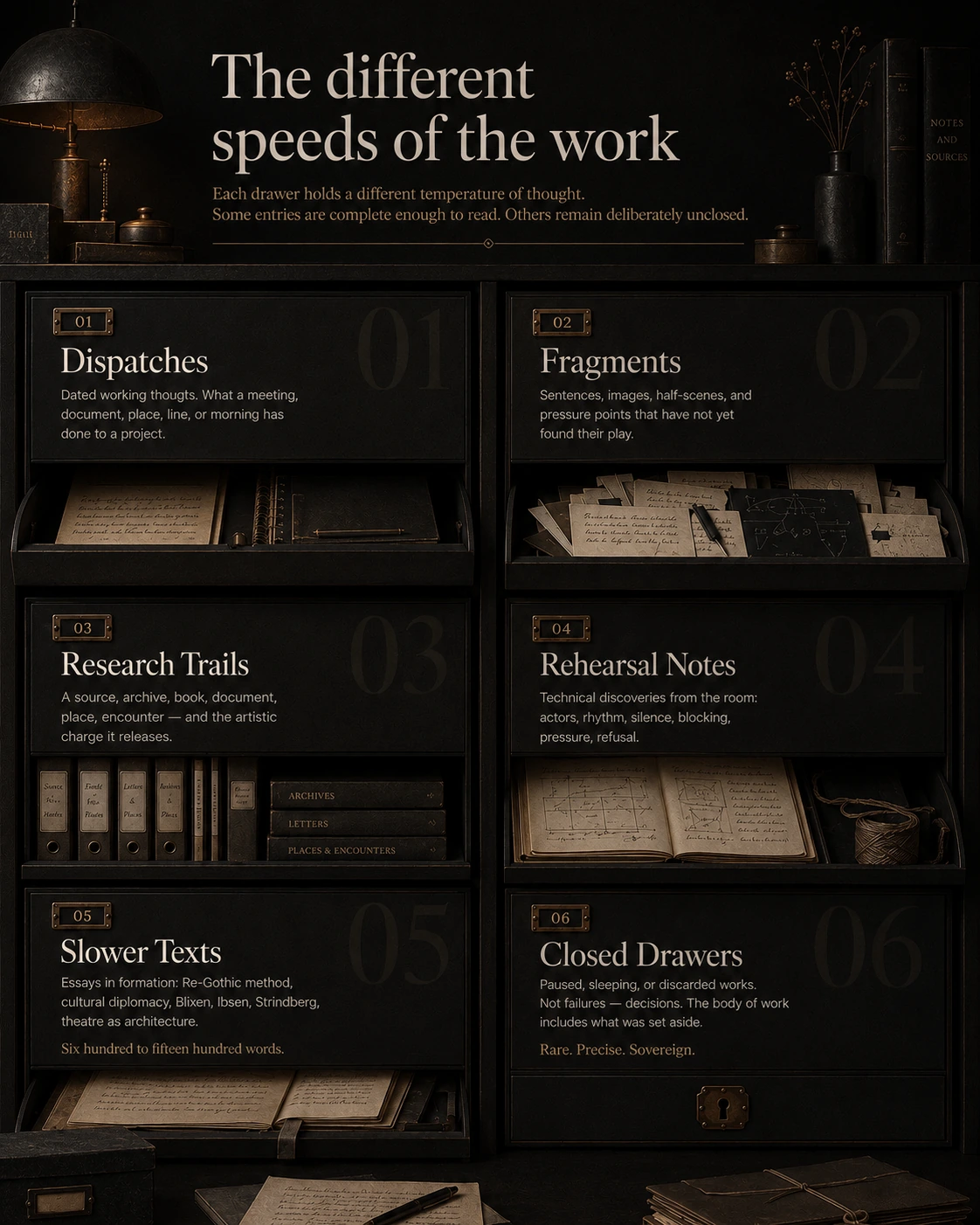
These opening entries establish the law of the room: one statement, one fragment, one research trail, one rehearsal note, one slower text, one closed drawer.
This is the live chamber behind the finished work. Fragments, research trails, rehearsal notes, slower texts in formation, and the occasional closed drawer. What appears here is not announcement, archive, or press material. It is working matter — the unfinished architecture behind the public works.
The pistol still fires. The file still closes.
Pellegrina’s third mask is the one that fits. The first two were costumes. The third is a face she has grown into without noticing.
A government does not hallucinate. It watches a village hallucinate and writes a memorandum.
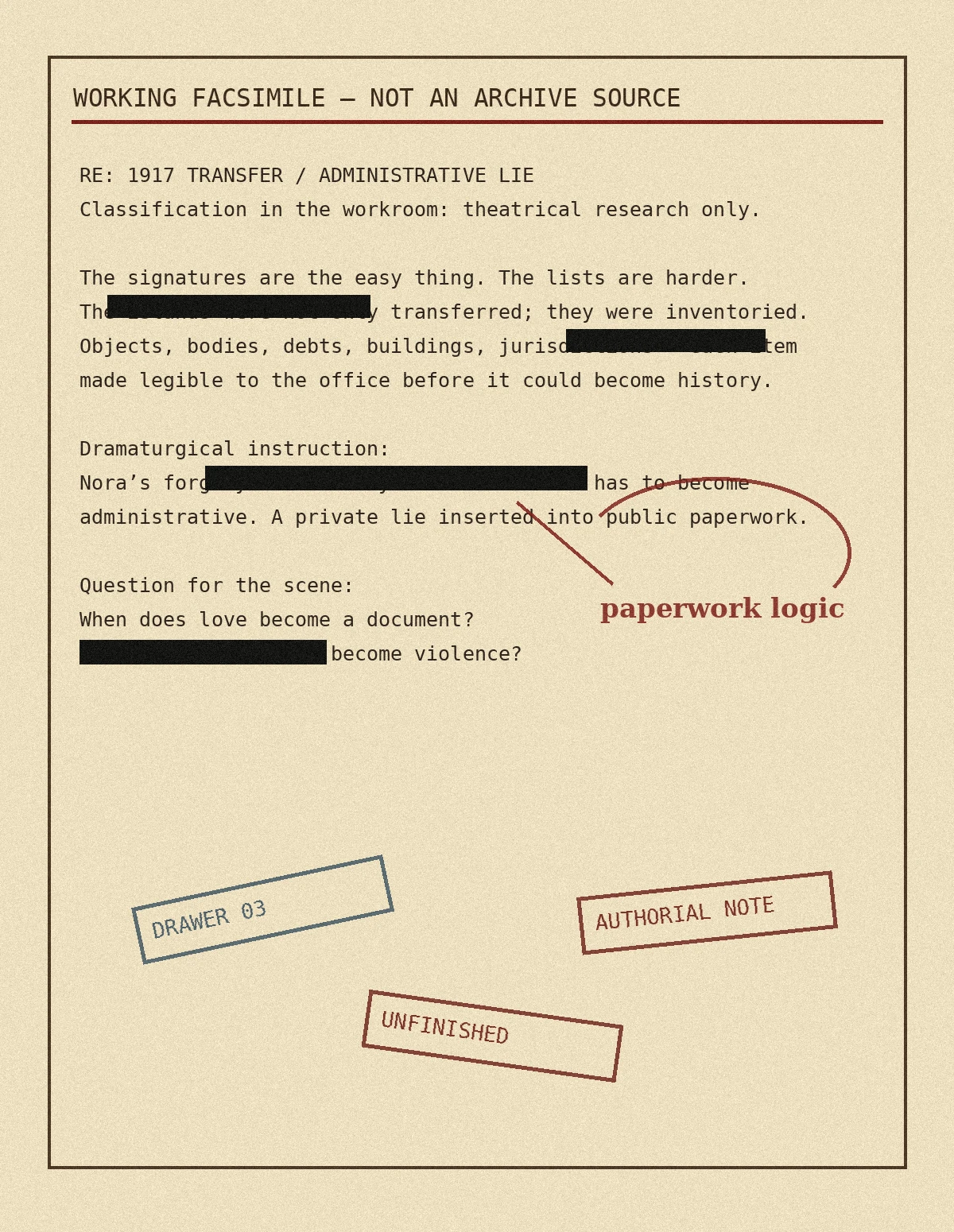
Reading the 1917 Transfer material again. The signatures are the easy thing. The lists of what was transferred — item by item — are harder. The Danish West Indies were not only sold; they were inventoried.
Nora’s forgery in Et Dukkehjem i Dansk Vestindien has to live inside that paperwork logic. The lie cannot only be romantic. It has to become administrative.
Looking back at Miss Julie’s Happy Valley, the crucial problem was never simply how to move Strindberg to colonial Kenya. It was how to stop Jean from arriving as an imported European servant and make him belong to the violence of that house.
The kitchen could not be only domestic. It had to become a colonial theatre of permission: who pours, who waits, who touches the table, who is allowed to desire upward, and who pays when the illusion collapses.
Cultural diplomacy is often misunderstood as politeness with flags attached. That is too small. In an authorial practice, cultural diplomacy is not the decoration of state relationships; it is the construction of rooms where difficult histories can be entered without immediately becoming slogans.
The artist does not become the ministry. The work does not become a brochure. But the artist can build a corridor that a ministry, a museum, a consulate, a theatre, and an audience may each enter for different reasons — and still meet inside the same architecture.
This is why the personal site must remain sovereign-authorial. It cannot behave like an institution, because the institution already exists elsewhere. Its task is to show the mind capable of making institutions, partners, archives, memories, and wounds gather inside a form.
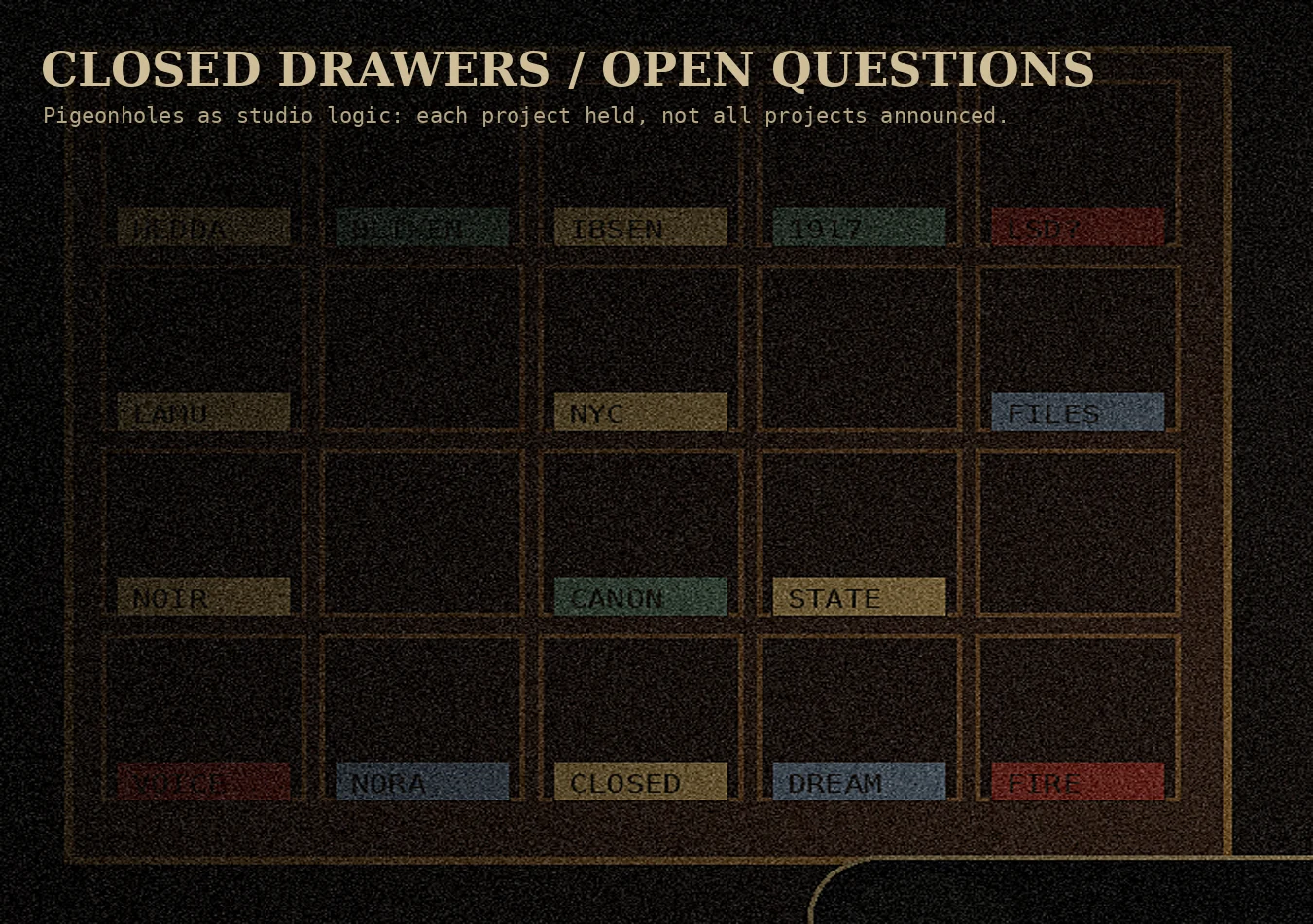
A scenographic study around polar silence, psychiatric patients, Indigenous memory, and colonial cartography. Returned to the drawer after early development. It may resurface inside a larger architecture, or it may remain closed until the right ethical frame exists.
Status: sleeping drawer.
Multimedia law
The Workroom can hold many media types, but each must behave like working evidence. Not publicity. Not proof of status. A trace before the work becomes official.
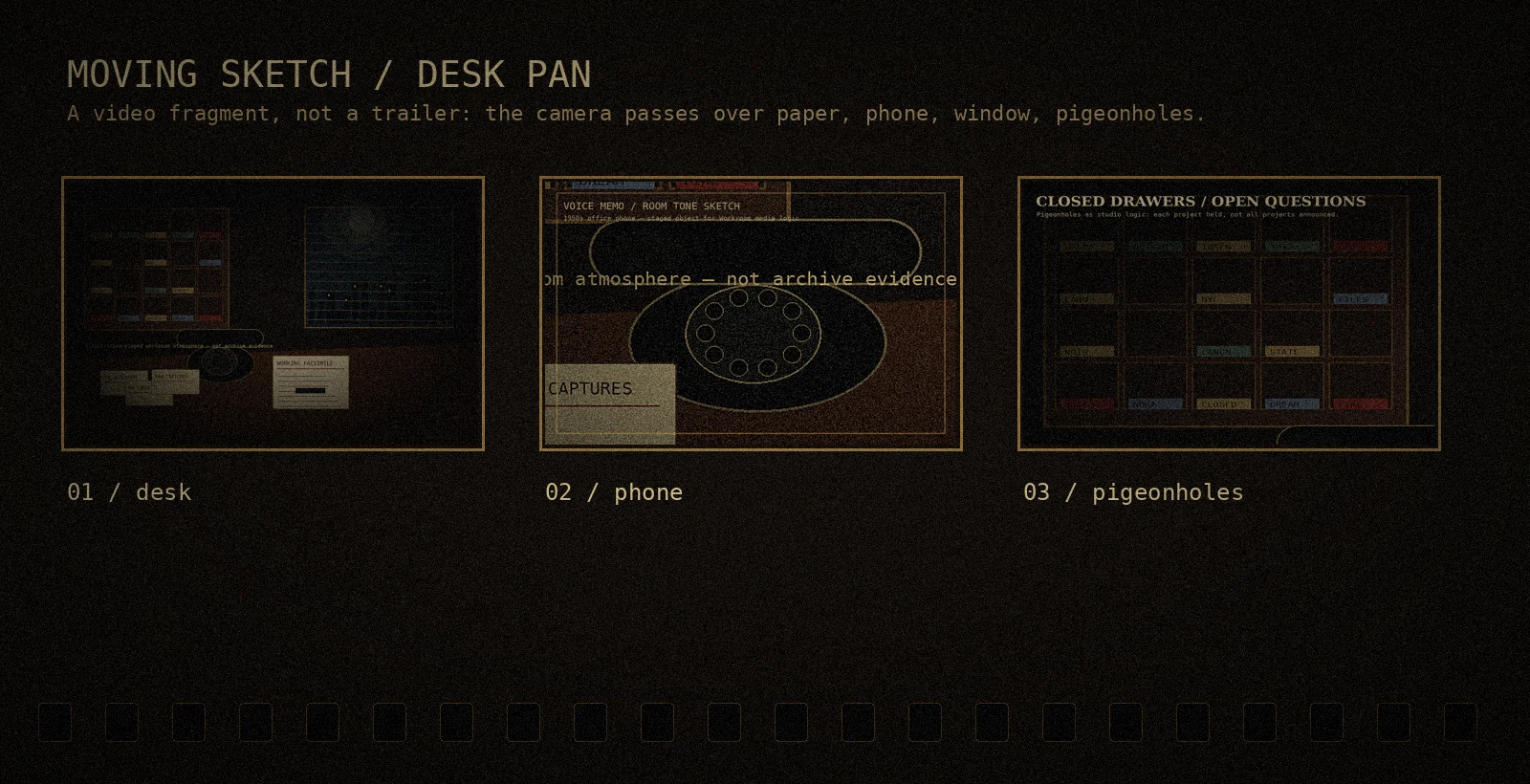
A moving sketch can be a pan across a desk, a model, a door, a hand, a route. Once it has titles and music, it has graduated out of the Workroom.

Working scripts, marked passages, source pages, printed fragments. The power is in the encounter between hand, source, and pressure.

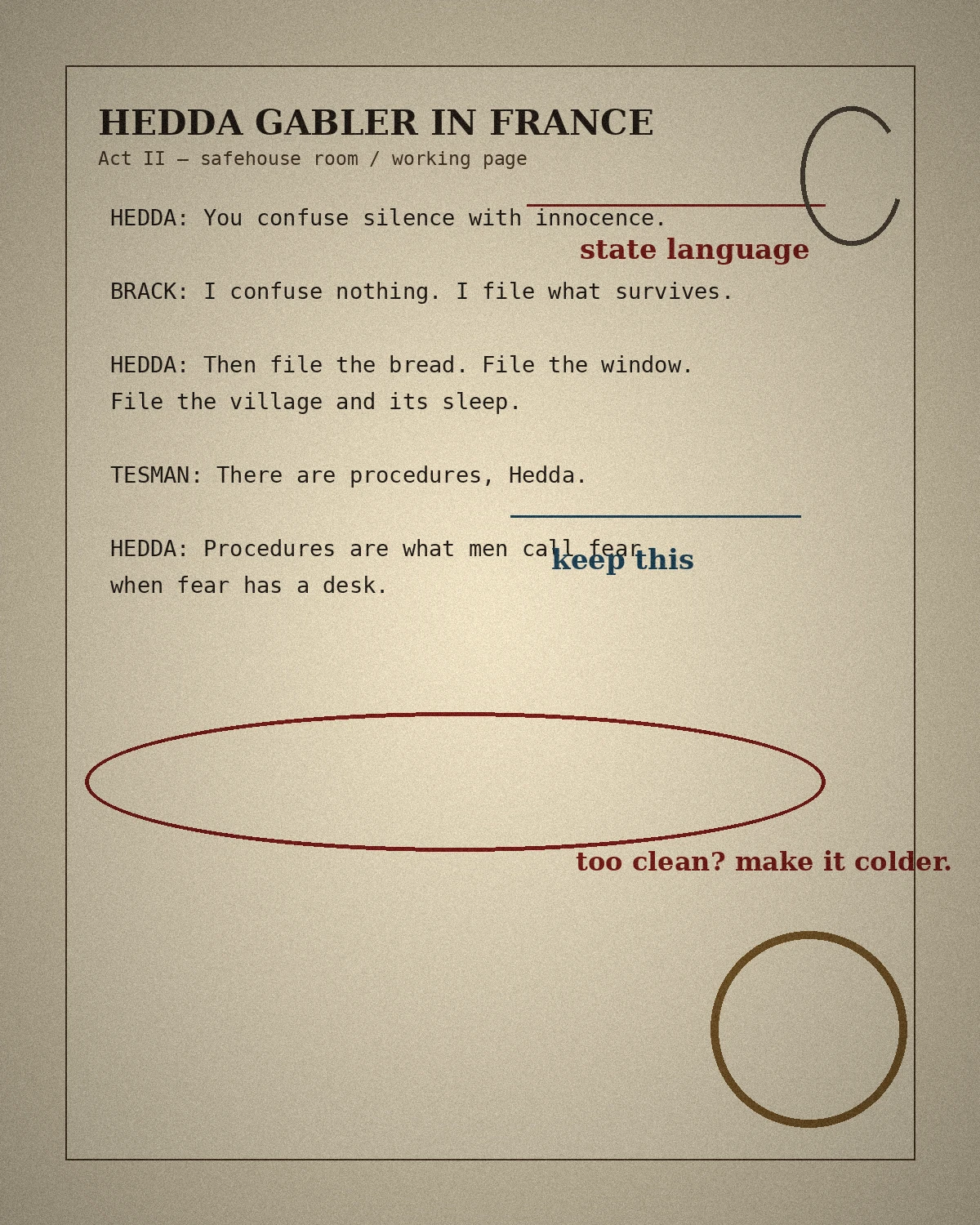
Marginalia shows the mind arguing with the page. It is not illustration; it is the rehearsal of thought.

A voice memo is not a podcast. It is a captured hesitation, a scene problem, a walk, a breath.

Drawers, folders, cards, boxes: the architecture of projects that are sleeping, paused, or not yet named.

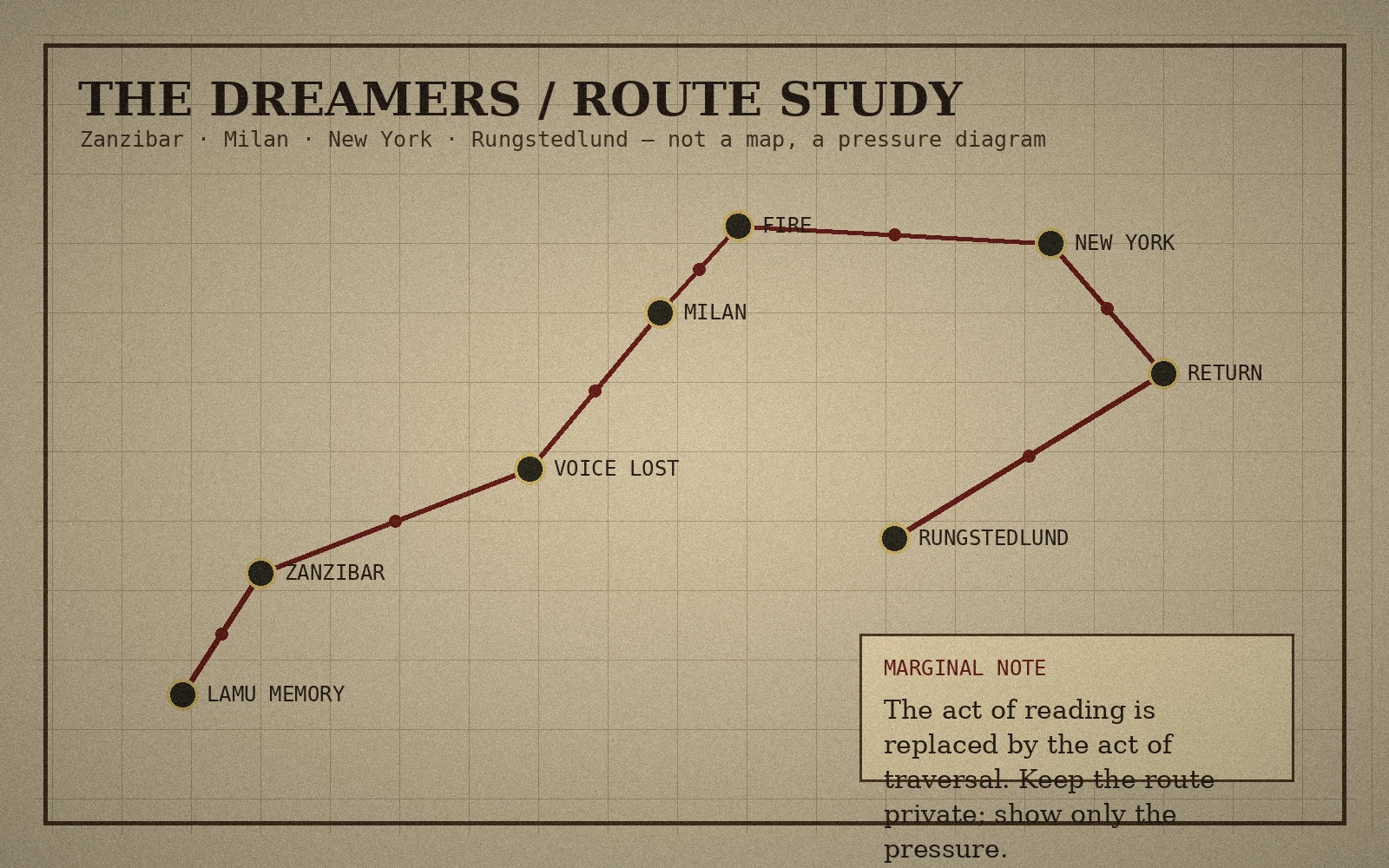
Routes, chambers, pressure points, floorplans, and spatial-libretto traces. Roughness is the signal.

Sketches, diagrams, storyboards, floorplans, route drawings. The Workroom is allowed to show the line before the line is clean.
Download a working fragmentWhat enters
What stays out
Pace
Two to four entries a month is enough. Some weeks more, some weeks none. The Workroom gains authority by refusing the anxiety of a feed.